Learning Outcomes:
i. Define neurulation and its significance in embryonic development.
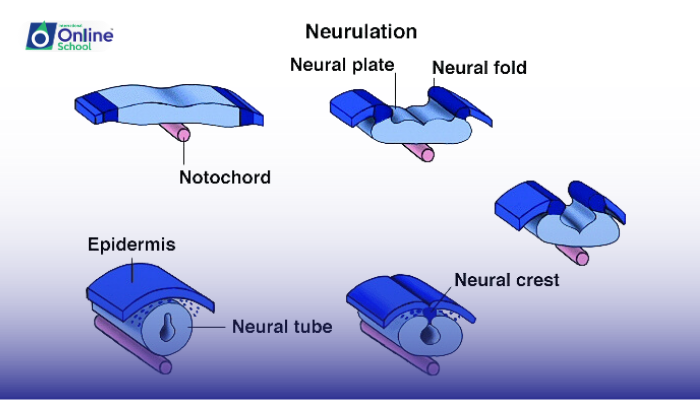
ii. Describe the key events of neurulation and the transformation of the neural plate into the neural tube.
iii. Explain the role of signaling molecules and cell movements in shaping the central nervous system.
iv. Appreciate the delicate balance of factors that ensures the successful formation of the brain and spinal cord.
Introduction:
Imagine a single, flat sheet of cells holding the blueprint for the most complex organ in the human body – the brain. This sheet, called the neural plate, embarks on a remarkable journey during neurulation, transforming into the neural tube, the foundation of our central nervous system. In this lesson, we'll delve into this captivating process, witnessing the delicate dance of cell movements and signaling molecules that culminates in the birth of our thoughts and senses.
i. The Stage is Set: From Flat to Folding
Neurulation unfolds within the developing embryo, where the neural plate, nestled between the ectoderm and endoderm, undergoes a series of dynamic transformations:
Induction: Signaling molecules released by the notochord, a rod-like structure below the neural plate, trigger its cells to differentiate and become neuroectoderm.
Cell Movement: Neuroectoderm cells begin to migrate inwards, folding the edges of the neural plate towards each other like a book closing.
Fusion: As the edges meet, they fuse to form a hollow tube – the neural tube.
ii. From Tube to Triumph: Building the Nervous System
The neural tube, now protected within the embryo, is far from complete. Its journey continues:
Differentiation: Within the neural tube, cells specialize into different types of neurons and glial cells, each with specific roles in transmitting signals and supporting the nervous system.
Regionalization: The tube expands and constricts, forming distinct regions that will develop into the brain, spinal cord, and peripheral nerves.
Cellular Scaffolding: The notochord guides the growth and differentiation of the neural tube, providing a crucial supportive framework.
iii. The Orchestra of Development: A Balancing Act
Neurulation is not a solo performance; it's a symphony orchestrated by a complex interplay of factors:
Signaling molecules: Precise timing and specific signals are crucial for guiding cell movements and differentiation.
Cell adhesion: Strong bonds between cells ensure proper fusion and prevent leaks in the neural tube.
Physical forces: Mechanical forces generated by cell movements and fluid flow help shape the tube's final form.
iv. A Delicate Dance with Consequences:
The success of neurulation is vital for the development of a healthy nervous system. Disruptions in any of the critical factors can lead to serious birth defects, affecting brain function and motor skills.
Neurulation, with its intricate choreography of cell movements and signaling molecules, is a testament to the awe-inspiring power of life's early development. It is a process that grants us the ability to think, feel, and interact with the world around us. By understanding this remarkable journey, we gain a deeper appreciation for the fragile yet resilient nature of our nervous system and the delicate balance that ensures its successful formation.
